

01
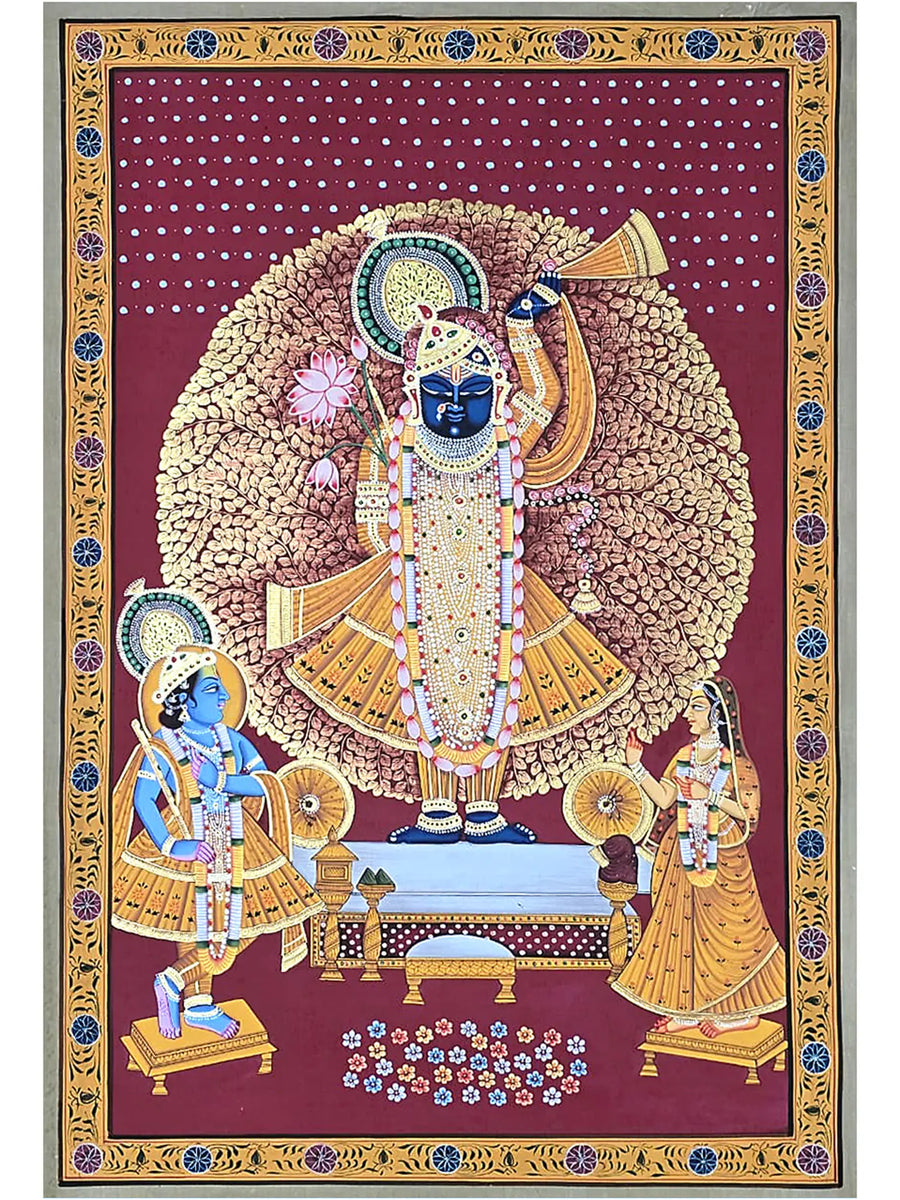
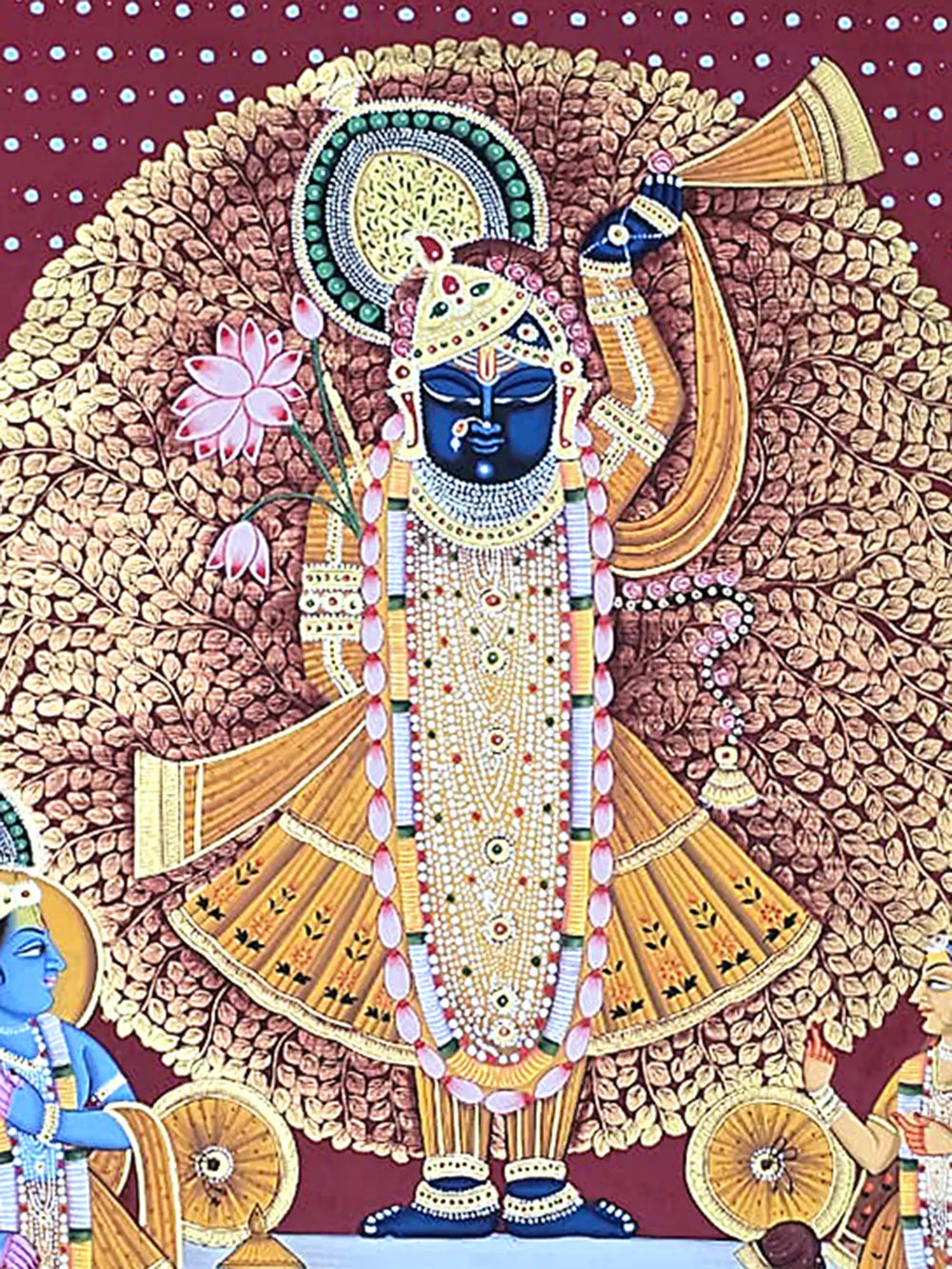
A Pichwai celebrating 'The Divine Harmony of Shrinathji and Devotees' embodies the intimate relationship between the deity and his followers, a cornerstone of the Pushtimarg tradition.


KARM 108
SKU: DDV508
Rs. 39,375.00
Rs. 31,500.0020% OFFInc. GST
Free shipping · Pan India
A tenth of every piece returns to the hands that made it. 10% of each sale is devoted to the welfare of the artisans behind the craft.
Certificate of Authenticity
Every KARM 108 painting arrives with a signed certificate verifying its origin, art form and the hands that made it.
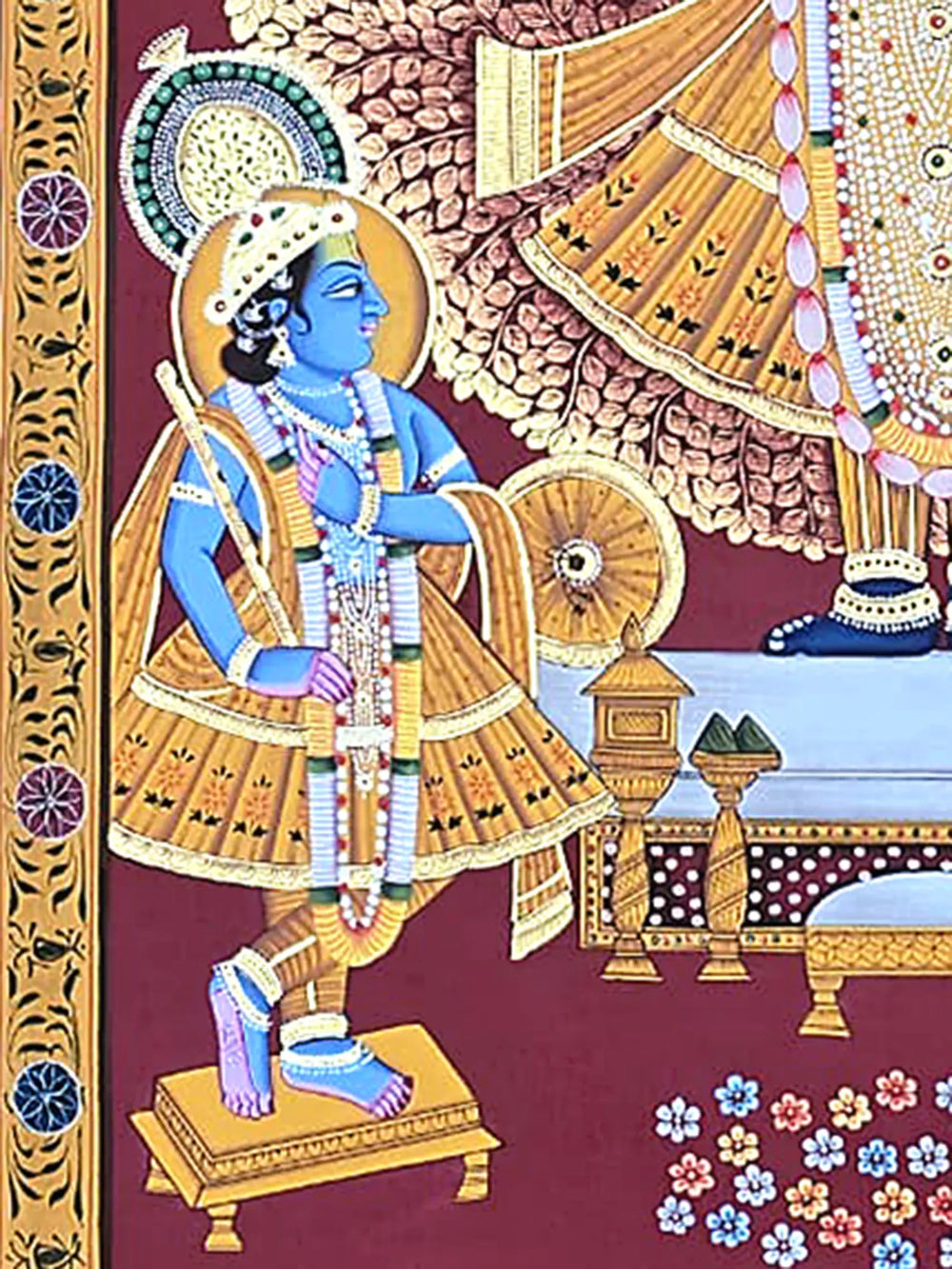
Pichwai paintings from Nathdwara are profound visual narratives, conceived as devotional backdrops for the idol of Shrinathji, Krishna revered as a seven-year-old child. A Pichwai celebrating 'The Divine Harmony of Shrinathji and Devotees' embodies the intimate relationship between the deity and his followers, a cornerstone of the Pushtimarg tradition. Shrinathji is typically depicted centrally, adorned in regal attire, his form emanating divine grace, often surrounded by gopis, gopas, or other devotees engaged in various acts of reverence. Such scenes frequently incorporate elements emblematic of Vrindavan, Shrinathji's pastoral home, including sacred cows and lush lotus ponds, all rendered with the exquisite detail and spiritual fervor characteristic of these sacred hangings which also visually document the festivals like Sharad Purnima and Annakut.
This splendid work is meticulously hand-painted by artist Dheeraj Munot, utilizing natural colors on cotton cloth, a medium and technique passed down through generations of Nathdwara artisans. The tradition of Pichwai originated centuries ago in Nathdwara, Rajasthan, specifically to serve the needs of the Shrinathji Haveli, where these intricate hangings create an immersive environment for the deity's worship. Each pigment is carefully prepared, often from minerals and vegetable dyes, lending the painting its distinctive vibrancy and longevity. The fine brushwork and detailed compositions are hallmarks of this devotional art form, reflecting its purpose to glorify Shrinathji and the rich iconography of the Pushtimarg sect.
This magnificent Pichwai is presented as a singular, hand-painted original, a unique artifact bearing the artisan's distinct touch, far removed from any mass-produced print. It is offered with a signed Certificate of Authenticity, guaranteeing its provenance and craftsmanship. We ensure complimentary, insured delivery across India, allowing this piece of profound spiritual and artistic heritage to reach your collection safely.
Ships within 30 days across India, insured and free of charge. 7-day returns on undamaged pieces.
Natural Color on Cotton Cloth.
The Fit
| Size | Chest | Length | Sleeve |
|---|---|---|---|
| S | 42" | 26" | 9" |
| M | 44" | 27" | 9.5" |
| L | 46" | 29" | 10" |
| XL | 48" | 29" | 10.5" |
Note: These are garment measurements, not body measurements.
For a more relaxed fit, we recommend sizing up.
Pichwai · Nathdwara, Rajasthan
Pichwai paintings from Nathdwara are profound visual narratives, conceived as devotional backdrops for the idol of Shrinathji, Krishna revered as a seven-year-old child.
A cloth made to hang behind the deity — devotion you can see.
01
A Pichwai celebrating 'The Divine Harmony of Shrinathji and Devotees' embodies the intimate relationship between the deity and his followers, a cornerstone of the Pushtimarg tradition.

02
Shrinathji is typically depicted centrally, adorned in regal attire, his form emanating divine grace, often surrounded by gopis, gopas, or other devotees engaged in various acts of reverence.

03
Such scenes frequently incorporate elements emblematic of Vrindavan, Shrinathji's pastoral home, including sacred cows and lush lotus ponds, all rendered with the exquisite detail and spiritual fervor characteristic of these sacred hangings which also visually document the festivals like Sharad Purnima and Annakut.This splendid work is meticulously hand-painted by artist Dheeraj Munot, utilizing natural colors on cotton cloth, a medium and technique passed down through generations of Nathdwara artisans.


